Welcome to one of the most active flamenco sites on the Internet. Guests can read most posts but if you want to participate click here to register.
This site is dedicated to the memory of Paco de Lucía, Ron Mitchell, Guy Williams, Linda Elvira, Philip John Lee, Craig Eros, Ben Woods, David Serva, Tom Blackshear and Sean O'Brien who went ahead of us.
We receive 12,200 visitors a month from 200 countries and 1.7 million page impressions a year. To advertise on this site please contact us.
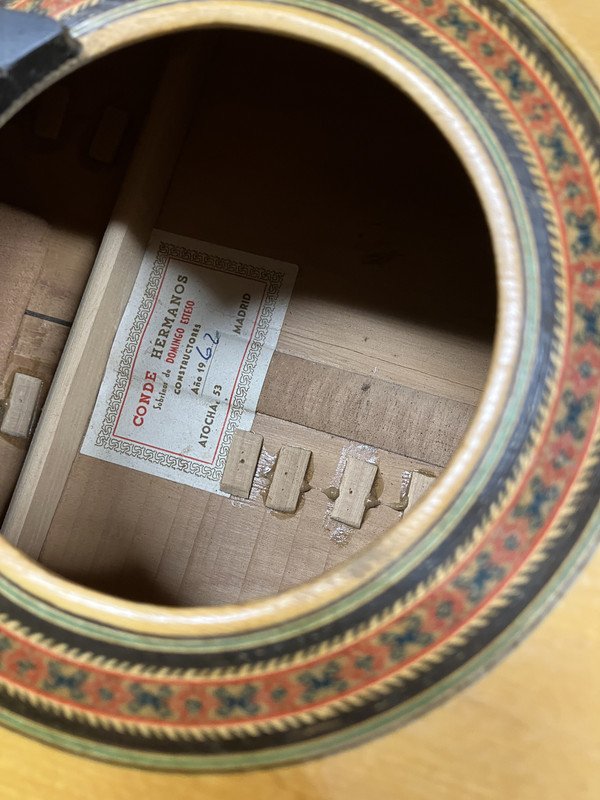
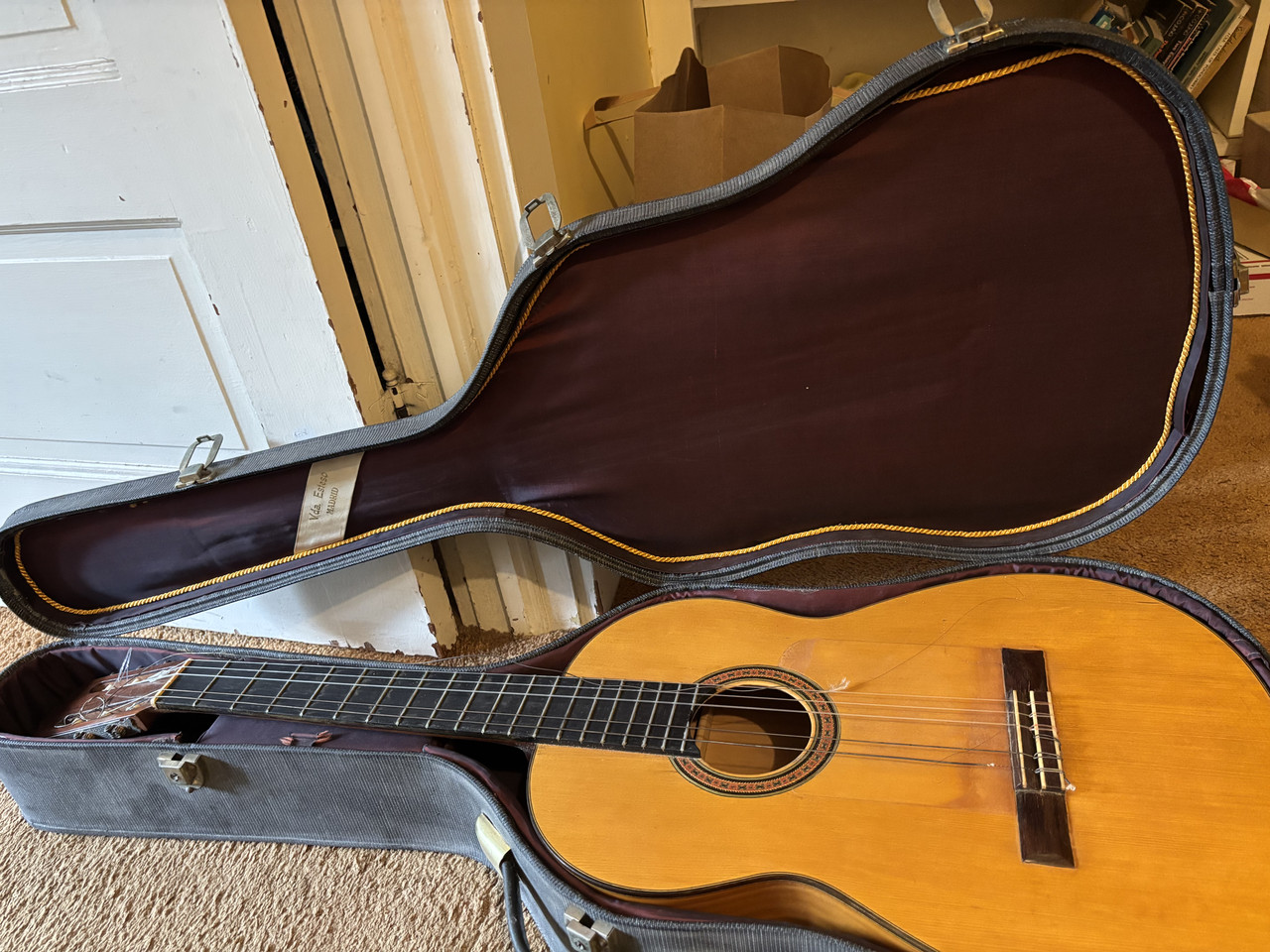
Unisgned Sobrinos de Esteso with a couple of back cracks but should be pretty sweet! Still needs one crack repaired and a new golpeador (old one peeled off almost instantly). Can't wait to hear it.
Images are resized automatically to a maximum width of 800px
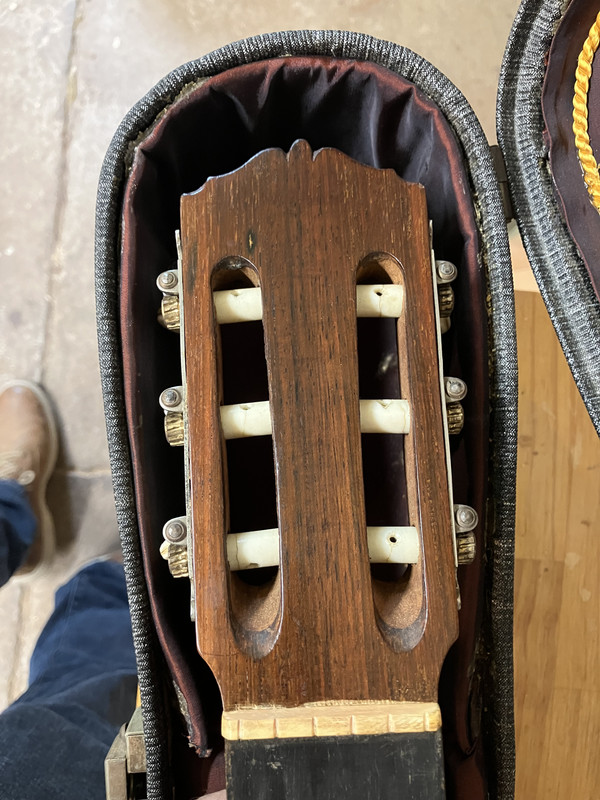
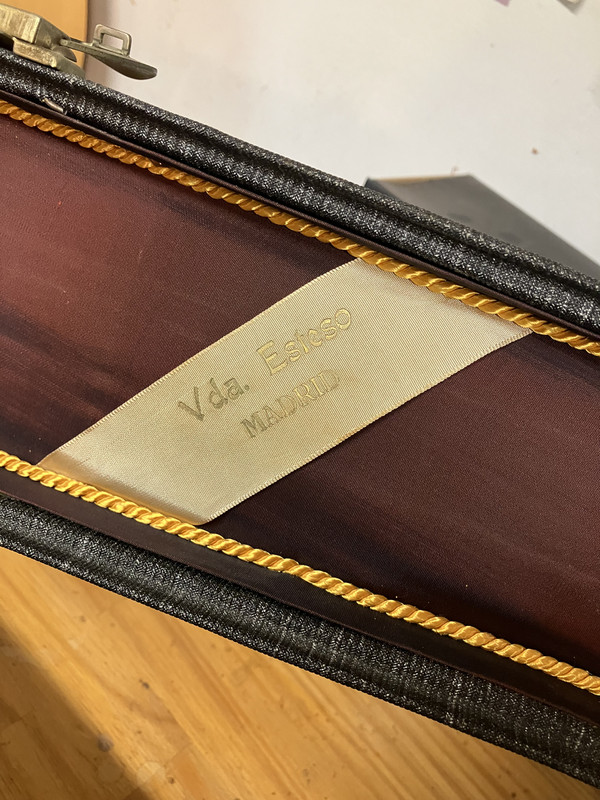
I am into that Viuda de esteso case more than the guitar.
The case is super cool! Not even too beat up. My friend who sold it to me said it was his Dad's (recently passed) and he never heard or saw him play it. So it definitely has some waking up to do after 40+ years.
It took me a minute but I'm starting to really like this guitar. It felt kind of stiff at first, but I realized it's one of those guitars that really demands and rewards a strong right hand. When I push it hard it totally outclasses my guitar. It feels like a professional's guitar but I'm not sure I'm up to the challenge!
Exactly. These guitars have that and also that macho tone on the fundamentals which makes them very loud in a noisy environment if pushed. Somehow the thing about “pulsación” (which is now meant as a joke here in the forum) makes perfectly sense when you associate that with these kind of guitars. Your guitar is made substantially the same as a first class Esteso of those years: The Conde made in later years are 200 grams heavier and mellower but still keep that quality.
Yep this is 100% a "masculine" guitar. If pulsación is a myth then I guess I believe in bigfoot. You can tell from the first notes that it has a stiffer right hand feel.
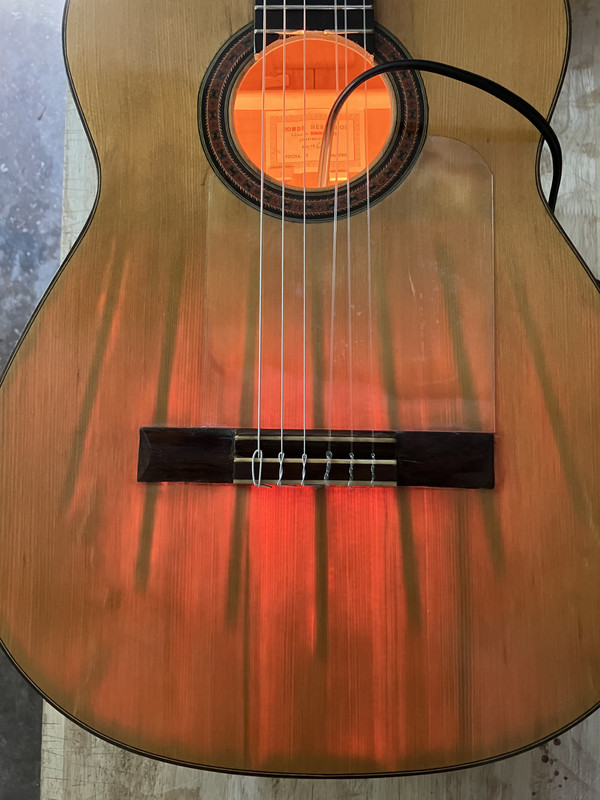
For those who are curious: It has a slightly asymmetric bracing where the braces on the treble side are angled slightly more than the ones on the bass side. Similar to certain Santos Hernandez ideas from the mid-'30s
The top is relatively thick, mostly about 2.4-2.5 mm measured with a Hacklinger gauge, with some thinner areas on the bass side. But the fan braces are very low, 3 mm tall at most with a pyramid shape. Body resonance F#. Total weight 1333 grams. 650/52. After playing for a while I believe it is a serious instrument! It sounds much more open today than it did yesterday.
Images are resized automatically to a maximum width of 800px
Setup is 7.5 mm at the bridge and 3 mm action all the way across. A little high but it helps the notes ring out and it seems intentional as the neck is dead flat and the soundboard doesn't show any deformation.

 Printable Version







 New Messages
 No New Messages
 Hot Topic w/ New Messages
 Hot Topic w/o New Messages
 Locked w/ New Messages
 Locked w/o New Messages
 Post New Thread