Welcome to one of the most active flamenco sites on the Internet. Guests can read most posts but if you want to participate click here to register.
This site is dedicated to the memory of Paco de Lucía, Ron Mitchell, Guy Williams, Linda Elvira, Philip John Lee, Craig Eros, Ben Woods, David Serva, Tom Blackshear and Sean O'Brien who went ahead of us.
We receive 12,200 visitors a month from 200 countries and 1.7 million page impressions a year. To advertise on this site please contact us.
Posts: 16508
Joined: Dec. 14 2004
From: Washington DC
Music Theory debate
The "flamenco" relevance comes in towards the end, so this post is not for everybody here. This guy has his own system that does away, basically, with the classical "minor key" vs or in favor of the other natural modes defined by a key signature only. He challenged this theory Facebook group to a debate to defend his idea against the Western Common Practice era's two key system (major or minor). Nobody here probably cared much about the latter as we use the modal Phrygian (a constant debate), so I offered to debate the opposing side of the two key classical idea (I am playing devil's advocate basically). After like an hour ( ) I admit that I am not in disagreement with his idea and in fact recognize the co-existance of the older modal systems from the Renaissance, with the two key system. Yes, it is esoteric and nerdy, but it was what the guy wanted to engage with.
Not since I posted the 19th century guitar video. Camera angle (come on guys, instagram much?) the camera from above to below makes you look skinnier than you are, and the camera angle from below makes you look obese. Plus my new shirt is rather form fitting (meaning gay ).
That theory thing is getting around social media. I ran into it yesterday. I told the person touting it that the music theory section of a large public library still has the books required.
the camera from above to below makes you look skinnier than you are,
thanks for the tip. now I know how to make my first youtube video without people noticing how fat I have become (I will install the camera on my roof for max. result)
That theory thing is getting around social media. I ran into it yesterday. I told the person touting it that the music theory section of a large public library still has the books required.
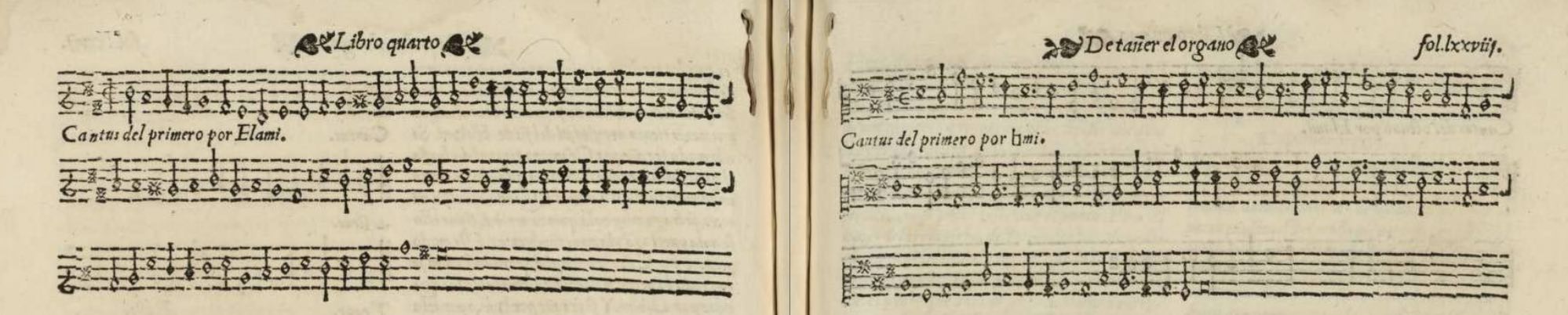
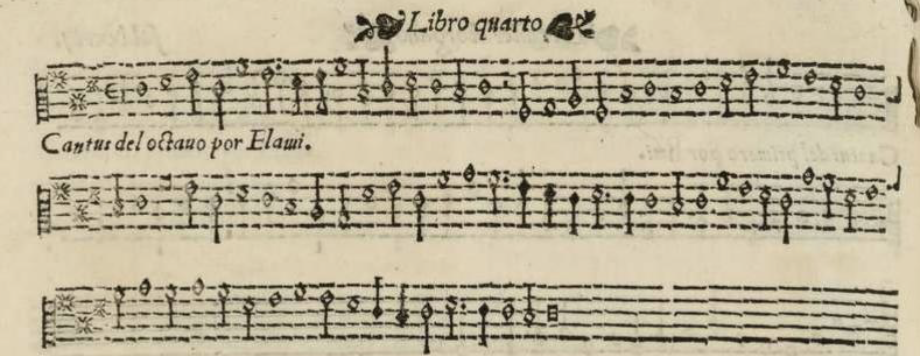
It slipped my mind totally that the source you clued me in to long ago that relates to this subject, Juan Bermudo, actually advocated for altering the KEY SIGNATURE to reflect transpositions of the modes. This is exactly what this guy Brian Kelly is advocating in favor of (use the key signature of the notes the mode actually uses vs a major or minor tonal key signature), and shows what might be the earliest historic SHARP key signatures as a result. It ties it to the "Elami" tuned vihuela (he wanted us to imagine this instrument to do transpositions, and I discussed a while back about Venegas preferring that ACTUAL vihuela for realizing the majority of motet repertoire thanks to the range, which is identical to the modern guitar). So basically this would be historical ammo this guy could use in favor of his system (more or less). Notice since there was not yet the circle of 5ths concept but Bermudo uses the incorrect order (G#C#F#), but the concept is clear what he is advocating for.
First image is "primero" meaning FIRST MODE (D Dorian) transposed to Elami (E dorian) with two sharps in G clef, and on the facing page the same mode transported to "h-mi" or B Dorian, using 3 sharps in C clef. Second image is 8th mode (G hypomixolydian) transposed to E Mixolydian with 3 sharps in C clef.
Images are resized automatically to a maximum width of 800px
A question: in the first half, while arguing for the prosecution, you make it seem like the main reason for collapsing of all modes into two - major and minor - is the adoption of equal temperament. (Later on you argue for the defence and we discover that there are still other like "E flamenco/phrygian" that survived).
However, as far as I remember, the equal versus unequal temperament is a different thing - it is the 'colours' of the different tonalities (like A min vs. F min or C maj vs. Ab maj) that were lost/flattened with the adoption of equal temperament. (THIS I understand, including the 'why'; I am confused about it being used the way you use it for the prosecution in the first half when speaking about something different - the collapse of modes into Major(+minor) only.)
Can you elaborate on this a bit? Could you have made the argument for the prosecution without invoking the equalization of temperament - why/how or why not?
To say it another way, the equalization of temperament occurred (much) later than the collapse of old modes into major+minor, so I am missing something in the logic of what you were presenting to the guy in the first part.
A question: in the first half, while arguing for the prosecution, you make it seem like the main reason for collapsing of all modes into two - major and minor - is the adoption of equal temperament. (Later on you argue for the defence and we discover that there are still other like "E flamenco/phrygian" that survived).
However, as far as I remember, the equal versus unequal temperament is a different thing - it is the 'colours' of the different tonalities (like A min vs. F min or C maj vs. Ab maj) that were lost/flattened with the adoption of equal temperament.
Can you elaborate on this a bit? Could you have made the argument for the prosecution without invoking the equalization of temperament - why/how or why not?
Have you ever seen a book called ‘Lutes, Viols and Temperament’?
It’s got it all broken down.
Equal temperament to an extent homogenizes the way different keys feel, but alleviate wild chord dissonance when groups of transposing instruments play together. The old system works for solo instruments or small groups of instruments that can utilize the same temperament tunings. There’s nothing stopping modern flamenco players from using tied gut frets and moving them to any particular old temperament positions 😂
Equal temperament to an extent homogenizes the way different keys feel, but alleviate wild chord dissonance when groups of transposing instruments play together.
I am aware; I made edits to my post above to clarify what I am looking for.
To say it another way, the equalization of temperament occurred (much) later than the collapse of old modes into major+minor, so I am missing something in the logic of what you were presenting to the guy in the first part.
So the true historical situation slowly emerges we realize that thousands of years ago, before the "microtones" of Ancient Greek and much later Makkam, and later still Indian sruti etc, there was the "diatonic" scale of ancient Mesopotamian instruments, mapping to our basic western major. Understanding we don't know of any precise micro tuning, we can assume that they were NOT modern math level equal tempered, and later we have Pythagorus. Along the way I realized that there was likely the situation that is still on going, that SOME people recognize the comma issue is solved by equal half steps (even if they only used 7 notes at a time), while others will continue to hate that and want more consonant beating intervals. So the fight begins, and we know that from the descriptions it never stopped till the present day. The situation branches off with the enharmonic 13 note modes, then gets worse and worse with the 53 pitch Turkish thing (nobody EVER using all notes of ANY system, usually a ball park of 7, as humanity already wanted from the start of civilization). Proof of the EQ comes from Juan Bermudo when he starts his series in 1549 advocating for Pythagorus (like a good humanist that just dusted off those books), but by 1555 revises his fret placement to a hair off of 12tet, and basically wants you to glue those in. He wants modal key signatures and 7 vihuelas in your head. Soon after Zarlino hits us with backward mode reading and 19 note keyboards!!!
Two steps forward, one step back, now we have autotune. So I hope you can see the tuning thing was NEVER solved literally, but had been on the table, most likely since cuneiform tablets!!! So when I say "when they get it together along comes the modes collapsing", we see in SPAIN thanks to Romerito, the circle was envisioned by guitar chording first (Amat 1596), so a consensus was slowly emerging the modes were vague and ambiguous no matter how you tune, in the WEST. Meanwhile Arabs etc. pretending they "invented" microtonality when all they are preserving really is the microtonal "arguments" about how to tune the octave and its divisions, of system X from history (possibly even corrupted after Western colonization, at least I strongly suspect that). So while it seems arbitrary that Westerners draw the proper circle in the 1700s, and were still fighting of tuning, we see the power of Bach following Fischer, completing the circle Fischer never could (nor Greiter nor others that tried that as a thought experiment), and at the same time dumping the E mode (Phrygian) in favor of ONLY two keys. Bach also did not even yet use "correct key signatures" as we think of them now, all the time. But that is soon on the way, and the basic circle becomes a "concept" our friend Brian Kelly can draw on his arm and teach kids about, but he just does not see the "point" of the "Minor key" in the framework....only because he did not ever understand the need for that argument that had gone on for thousands of years.
Considering the Eastern modal systems still exploit the microtones and exemplify what a "pure" and true mode can sound like (it is easy because the tuning forces the issue), we today have to be careful in how we present "Modes" in the equal tempered system. That business of "Ab has a certain color E major has this", that is people holding on to the Zarlino 19 note mess. They STILL teach kids in orchestra C# is intonated different than Db, horrific IMO. The kids don't know that is hanging on from a dead idea/system/argument. So it is ALSO alive and well. Many that understand this modal ambiguity issue realize we have this body of work called "common practice era" classical music that teaches us how to avoid the old traps of "ambiguity" by the major and minor key system, so care needs to be applied to any OTHER modes that were ignored by that system. Our Phrygian in flamenco is a great example because it takes years to master those cadences. People conflate it with the eastern system due to Phrygian fetish bias only, ignoring tuning which is the heart of those systems. I recognize the techniques, now, coming from the Renaissance when that ambiguity had been the name of the game and argument, hence demonstrations in Treatises of how to "do it RIGHT" with many contradictions back then. To play safe, most people today that get it stick to modal "vamps", or "non-functional progressions" etc. that limit the scale to the one or two color format to preserve one of the modes. This guy Brian was under the impression he could do that with ALL 7 CHORDS, which is dangerous because it invites accidentals to strengthen your tonic away from ambiguity, and that is ALREADY what the two key system is about. So we have to "keep it pure", and vamp according to special rules, or fall into the two key thing, or just use BOTH at the same time (tonal part of the song then a long modal vamp section, back to tonal chords, etc.).
What I realize is that the modes used to have "norms" from the Renaissance that express modal tonic, bypassing utterly that two key collapse and methods, and by repeating small ostinatos like Romanescas, Folia (same thing really), and etc., popular and jazz etc, is just doing the same thing and the auto tune thing or not is in fact arbitrary as people still can't tune their guitars or sing on pitch!!!
What I realize is that the modes used to have "norms" from the Renaissance that express modal tonic
I don't think you 'went there' in your chat with that guy, but wouldn't you say we have a good example from flamenco tonality for this above regarding harmonic functioning? As in, unlike major/minor tonality, flamenco has its second degree serving as a Dominant that gravitates towards the tonic; not the 5th. In E flamenco, this is F; in A flamenco, it is Bb; etc. Which is how it is used - the F-E (Bb->A) cadence is effectively dominant-tonic resolution. So, different, unique, rules.
What I realize is that the modes used to have "norms" from the Renaissance that express modal tonic
I don't think you 'went there' in your chat with that guy, but wouldn't you say we have a good example from flamenco tonality for this above regarding harmonic functioning? As in, unlike major/minor tonality, flamenco has its second degree serving as a Dominant that gravitates towards the tonic; not the 5th. In E flamenco, this is F; in A flamenco, it is Bb; etc. Which is how it is used - the F-E (Bb->A) cadence is effectively dominant-tonic resolution. So, different, unique, rules.
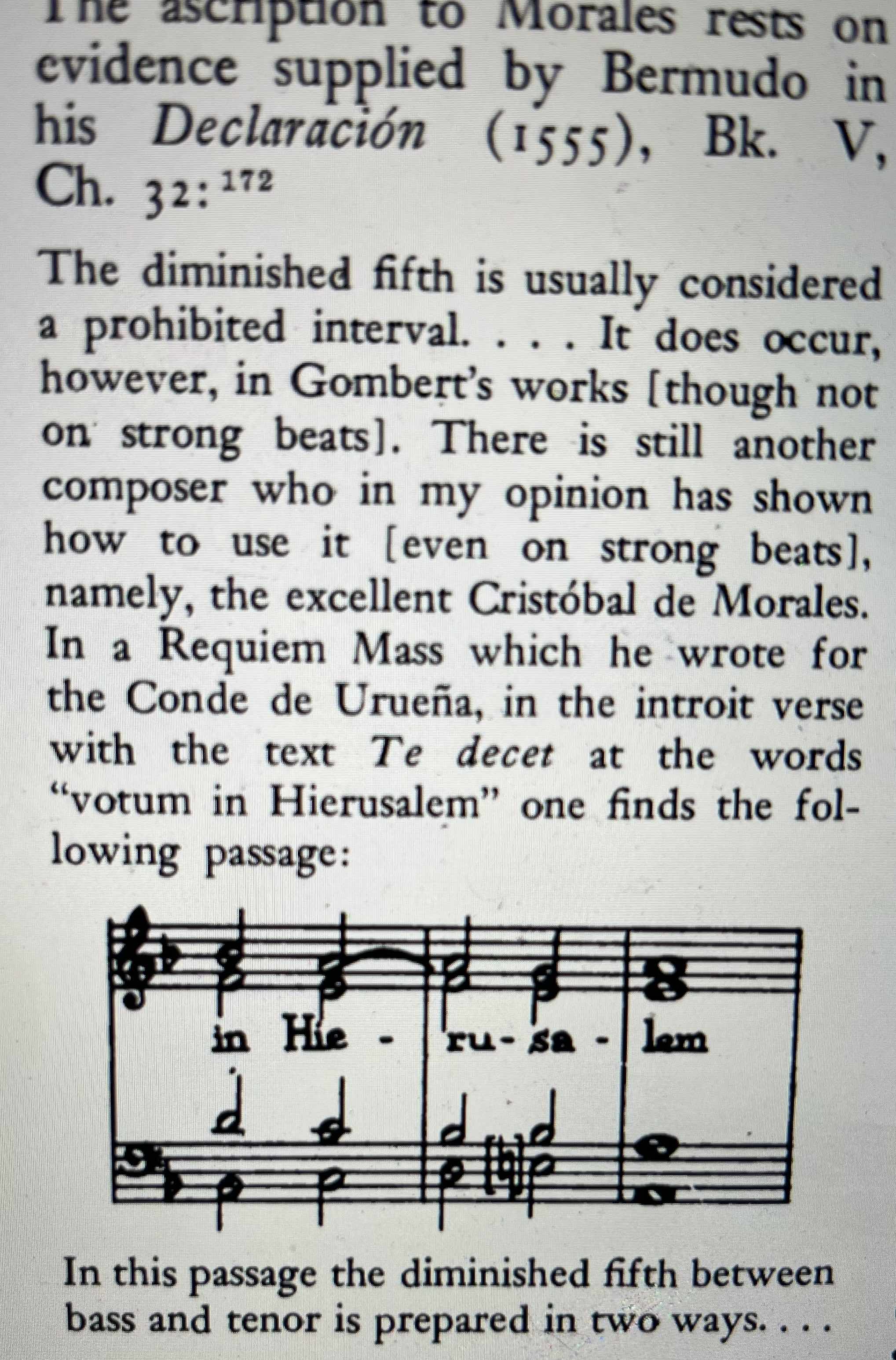
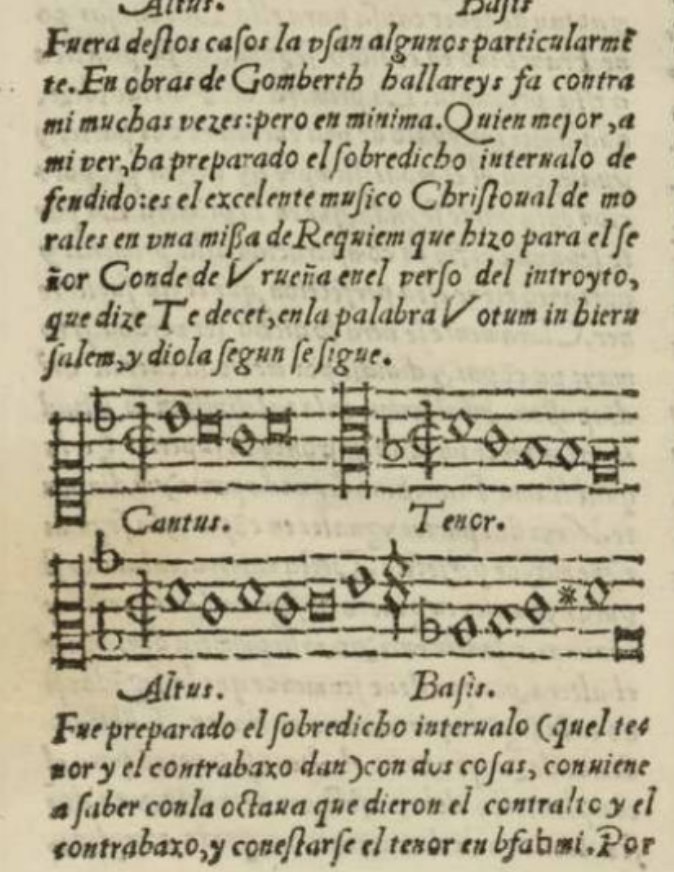
Yes. Well I did go there in the talk at the end as why I had to change my thinking about the circle and that lead me to doing some historical investigations (1:18:00 onwards). Notice Brian intuited on his own the "dominant of Phrygian" as I was talking about it (he knew it would be "B-E" around 1:21:00 or so). A large part of why the Phrygian collapses into the dominant function later, is that this cadence, the "mi mode" half-step resolution, was called a "soft" cadence. That is what "bemol" really means, it is a "softer" approach vs. the whole step which was thought of as "durum" or "hard" approach. The hard cadences became, historically, "stronger" in function as well, at least for the main melody. This thing we have discussed as an UPPER leading tone, and when you have both an upper and lower converging on the tonic, one would think this is a very "strong" conclusion to any melody. However, the historical thinking was different and in dealing with this soft cadence the tritone gets involved in a big way, especially if you decide to avoid parallel 5ths at the same time. I showed the Juan Bermudo Phrygian cadence highlighted in blue in the thread where I showed all the vihuela tablature:
We see how this approach has a staggered or off-set rhythm to avoid the harshness, or "golpe" as Bermudo called it. But in the same book he shows Morales using the tritone to good effect. Right there we see a clash of thinking where these guys in Spain were recognizing the harmonic and tonal value and "strength" of the tritone and the Phrygian cadence, as we see (images below) with the descending tetra chord or Andalusian cadence in the tenor voice, but for other thinkers in Europe, the soft cadences were problematic as final resolutions, and these get eaten up for use as "dominant function", aka, the "minor key". This thing becomes the "pre-dominant" in other words, for a proper perfect authentic HARD cadence that should come later. So this becomes about the aesthetic taste issues historically. The French 6th retains the tritone such that the 5th as the root (E to A move with Bb above the E, inverts so Bb-A can occur as a bass move while avoiding the parallel 5ths, F-E above the Bb-A). That is the chord of the family of Aug6 chords that reveals this 5-1 movement was lurking in the operation, and we observe now that certain modern musicians recognize the "strength" of this movement (Jazz altered dominant and tritone sub, such the E7alt is super Locrian and the Bb7#11 still has that E-A relation in the cadence, our flamenco of course also uses this). In classical music they don't recognize this strength and could argue against it historically due to this "soft" vs hard distinction of the resolution of the main melody. A way to highlight the change of thinking there: today bands like Metallica, Anthrax, and Slayer are mainly exploiting this wimpy, delicate or weak "soft cadence" with consecutive 5ths violations and tritones everywhere.
Images are resized automatically to a maximum width of 800px
What I realize is that the modes used to have "norms" from the Renaissance that express modal tonic
I don't think you 'went there' in your chat with that guy, but wouldn't you say we have a good example from flamenco tonality for this above regarding harmonic functioning? As in, unlike major/minor tonality, flamenco has its second degree serving as a Dominant that gravitates towards the tonic; not the 5th. In E flamenco, this is F; in A flamenco, it is Bb; etc. Which is how it is used - the F-E (Bb->A) cadence is effectively dominant-tonic resolution. So, different, unique, rules.
Some small additional info I just came across, this guy Nicolai Doizi de Velasco (Portuguese guy in Rome, later worked for king of Spain), published a treatise and manual for guitarists (5 course) in 1640 where he shows inversions and dissonant chords in his chart system (Italian alphabeto) and states that this is all possible thanks to the equal temperament fret placement that guitars use that Keyboard instruments don't have (various tuning methods), and he praised that equal spaced half steps (not unlike Bermudo) was good for accompanying singers. His system was rather complex and did not catch on at the time, but the point is equal temperament was super slow to adapt but was in existence to influence the musical change from the mode system to the tonal one. Basically we can thank Vihuela/Lute/Guitar players for these changes. It is further striking to me that Baroque music (Briseño to Sanz and afterward) had already seemed to dump those phrygian modes that I see in the older Vihuela rep (Guerau for example mode 3 uses F#, and mode 4 projects more as "dominant of the minor"), so this modal collapse seems to have already happened from my view point. Keyboard holding on with the Fischer Phrygian prelude and fugue being of the later examples in academic music (1702).
Here is Guerau, 1694, the guy playing is adding the strumming between the variations (he starts at the mid point if you have the tab) which makes it sound "more phrygian" to me than it looks on paper, but is an example of "late phrygian" that was much more prominent 100+ years prior. Our modern flamenco phrygian is way closer to the old conception than this:
It is further striking to me that Baroque music (Briseño to Sanz and afterward) had already seemed to dump those phrygian modes that I see in the older Vihuela rep (Guerau for example mode 3 uses F#, and mode 4 projects more as "dominant of the minor"), so this modal collapse seems to have already happened from my view point.
Moving on from this I just got around to looking at Santiago de Murcia closely. Well, Castro Buendia (p. 221 2014 dissertation) and others assert fairly strongly that he is using "phrygian" as the basis of his fandango, and the Andalusian cadence is well established by this time (1732), and I took it for granted a bit since his music did not use the proper "copla" I lumped him in with "fandango fluff" or "fakemenco" to separate it a bit from a strong influencer on our flamenco.
Well, now I am not so sure about his relevance other than "baroque guitar strumming". First of all, the source of his Fandango is untitled, yet assumed to be volume 1 manuscript of his two part Passacaglia collection. Comparing to other sources there is zero fandango stuff, so it stands out as possibly not his composition and rather just a popular set of variations. I defer to handwriting scholars that this is in fact HIS notebook but is it what he would really want to publish? I am dubious. And the assertion of "A tonic" rather than D minor is erroneous IMO. He uses a clear double bar line to conclude the dominant harmony and always starts to the right of that double bar with a D minor harmony of some sort. Yes he DOES have the "Andalusian cadences" avoiding 5ths via 4th inversions (Dm-Am/C-Gm/Bb-A major) but for sure based on his other pieces and method books he would not end this thing on the A chord. D minor is CORRECT as an ending 1000%. The problem is that it looks to not be complete as a piece anyway...music trails off in a bad spot to consider just repeating it or ending it definitely. So it is not a great example IMO of a definitive historic connection to our flamenco fandango (unlike Maximo Lopez harpsichord which is much stronger, though much later in 1800).
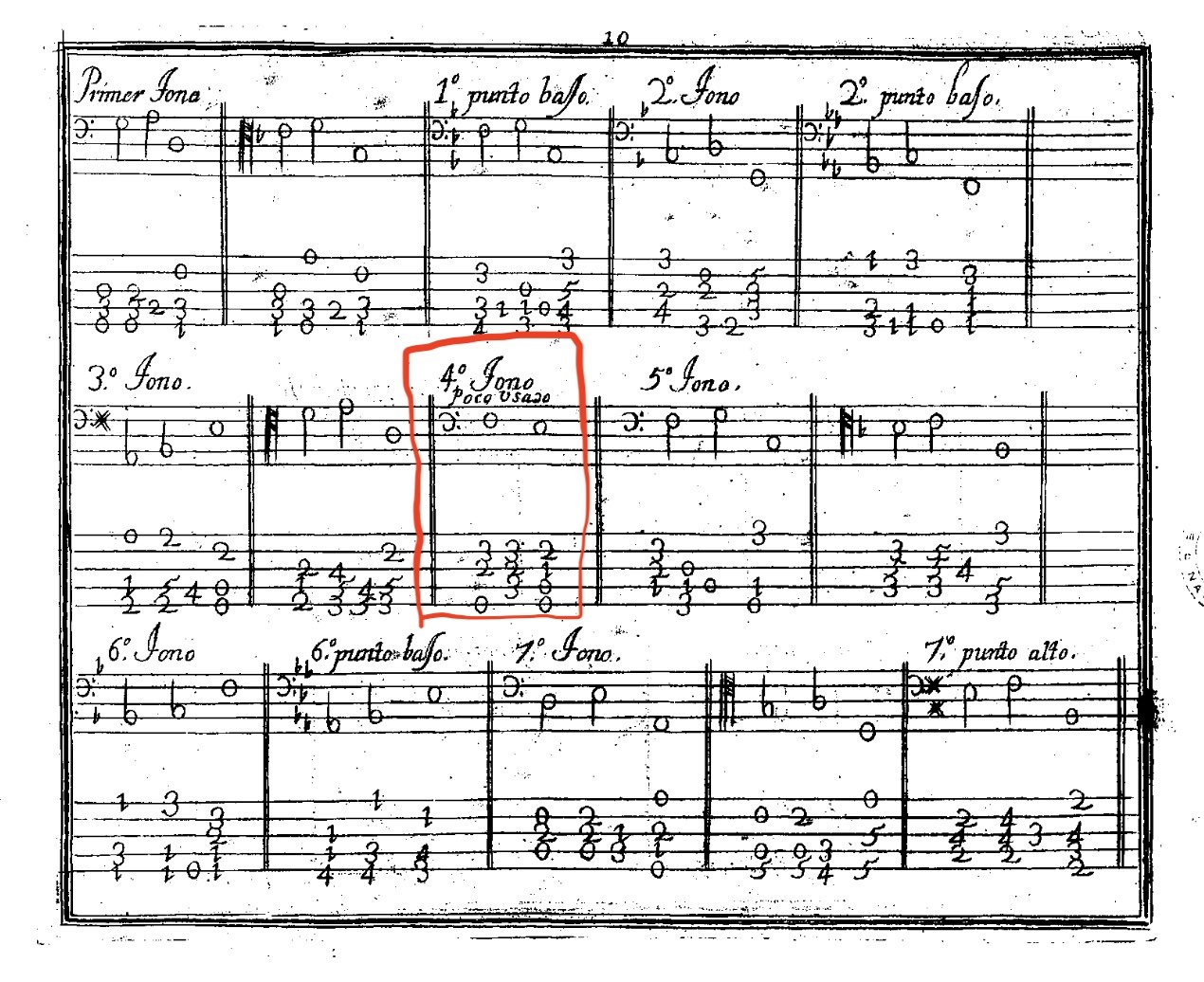
But as to this overlap of modal thinking into tonality, the collapse of modes and such, his 1714 method book (see image) really clearly shows the mental process or thinking of the time. This is before the Circle of 5th is concrete in Germany, however we have modal cadences that bridge the old Renaissance tonos, and transposition of modes (tonos 1-8) via messy key signatures (Bermudo 180 years earlier is way more clear about it).
But the big reveal in this image is that he relegates our important phrygian cadence tono 4, as "rarely used"!!! For me this insight is huge, and proves it was not really even in these Spaniards minds or ears at this time as an important expression anymore. It is literally downgraded to "dominant of tono 7" which he is showing as "A minor" inexplicable to me. (his other tonos align with the old renaissance ones for the most part). Even still, he does demonstrate later on, a bunch of cadential devices for the guitar and I found "Phrygian half cadences" for the following keys...(none of which sound very flamenco ish compared to the old vihuela stuff I showed in the other thread): A (only 2 examples) A# (odd key, but only 1 example) B (2 ex.) C (oddly 3) D (4 of these, makes sense with a 5 course) D# (1) E (only 3) G (oddly 4 of these) G# (1).
It feels like a strong disconnect from our evolution towards flamenco guitar in context.
Images are resized automatically to a maximum width of 800px
This priest has a great video on the history of chant music, this basic historical info sets up the polyphonic style of the Renaissance in a perfectly clear way, though it is a bit long. It basically sets up the top video in this post as to where the hell I am coming from with Renaissance music theory.
The early music practices and mindset set up a lot of our modern concepts of music in the WEST, while overlapping slightly with the Greek and middle Eastern modal scalar systems. It is important to note this guy is IGNORING utterly the complex tuning issues we have talked about already, but the basic concepts like the 7 note scale, why we have ABC, B-Bb-H issues, etc. It starts with Organum which he has another video on which is basically the practice of singing melody and harmony in perfect parallel 5ths and octaves.
He takes us from that stuff up to the guidonian hand and our basic scale concepts. It also overlaps with Manolo Sanlucars ideas about greek influence, in particular the Greater Perfect system demonstrated.
It is important to note that the "color" of his mode 3 (phrygian) chant example, (similar to an Arabic example Kitarist gave us a long time ago and the Turkish Makkam I thought sounded C major not E phrygian), does not sound like our modern phrygian, which again, I am saying is a result of SPECIFIC renaissance practices and repertoire. Meanwhile the Dorian example that jumps a 5th to 6th (D-A-Bb etc) has more the characteristics of A phrygian simply by way of melodic emphasis (though it is grounded on D minor).
At 17:10 he sings Gaudeamus:C-D-A-Bb-A-G-(F/G)-A-Bb-Bb-A....compare to Manolo Sanlucars Soleá por Bulería sung by Indio Gitano "de Capote":D-F-A-G-A-G-C-Bb-A-A. Very similar "chant" style theme ("de Triana traigo niña quien me compra").
 Printable Version



 ) I admit that I am not in disagreement with his idea and in fact recognize the co-existance of the older modal systems from the Renaissance, with the two key system. Yes, it is esoteric and nerdy, but it was what the guy wanted to engage with.

 New Messages
 No New Messages
 Hot Topic w/ New Messages
 Hot Topic w/o New Messages
 Locked w/ New Messages
 Locked w/o New Messages
 Post New Thread