|
Ricardo -> RE: Music Theory debate (Jan. 8 2026 12:02:45)
|
quote:
To say it another way, the equalization of temperament occurred (much) later than the collapse of old modes into major+minor, so I am missing something in the logic of what you were presenting to the guy in the first part.
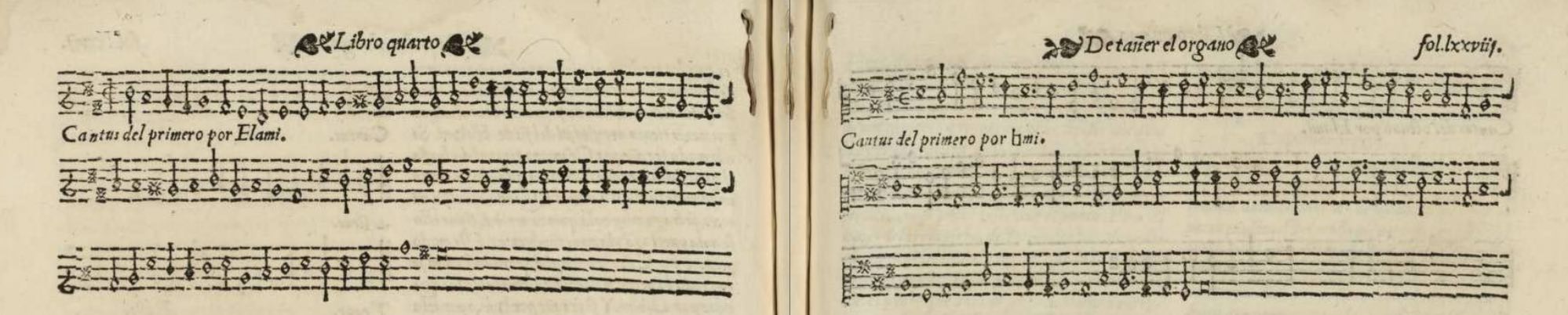
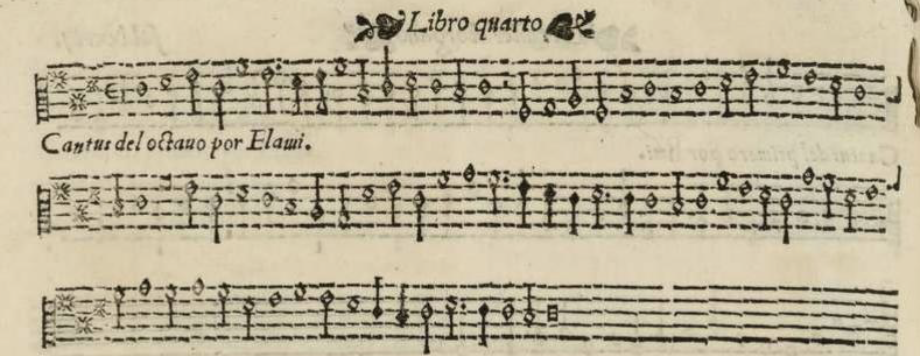
So the true historical situation slowly emerges we realize that thousands of years ago, before the "microtones" of Ancient Greek and much later Makkam, and later still Indian sruti etc, there was the "diatonic" scale of ancient Mesopotamian instruments, mapping to our basic western major. Understanding we don't know of any precise micro tuning, we can assume that they were NOT modern math level equal tempered, and later we have Pythagorus. Along the way I realized that there was likely the situation that is still on going, that SOME people recognize the comma issue is solved by equal half steps (even if they only used 7 notes at a time), while others will continue to hate that and want more consonant beating intervals. So the fight begins, and we know that from the descriptions it never stopped till the present day. The situation branches off with the enharmonic 13 note modes, then gets worse and worse with the 53 pitch Turkish thing (nobody EVER using all notes of ANY system, usually a ball park of 7, as humanity already wanted from the start of civilization). Proof of the EQ comes from Juan Bermudo when he starts his series in 1549 advocating for Pythagorus (like a good humanist that just dusted off those books), but by 1555 revises his fret placement to a hair off of 12tet, and basically wants you to glue those in. He wants modal key signatures and 7 vihuelas in your head. Soon after Zarlino hits us with backward mode reading and 19 note keyboards!!!
Two steps forward, one step back, now we have autotune. So I hope you can see the tuning thing was NEVER solved literally, but had been on the table, most likely since cuneiform tablets!!! So when I say "when they get it together along comes the modes collapsing", we see in SPAIN thanks to Romerito, the circle was envisioned by guitar chording first (Amat 1596), so a consensus was slowly emerging the modes were vague and ambiguous no matter how you tune, in the WEST. Meanwhile Arabs etc. pretending they "invented" microtonality when all they are preserving really is the microtonal "arguments" about how to tune the octave and its divisions, of system X from history (possibly even corrupted after Western colonization, at least I strongly suspect that). So while it seems arbitrary that Westerners draw the proper circle in the 1700s, and were still fighting of tuning, we see the power of Bach following Fischer, completing the circle Fischer never could (nor Greiter nor others that tried that as a thought experiment), and at the same time dumping the E mode (Phrygian) in favor of ONLY two keys. Bach also did not even yet use "correct key signatures" as we think of them now, all the time. But that is soon on the way, and the basic circle becomes a "concept" our friend Brian Kelly can draw on his arm and teach kids about, but he just does not see the "point" of the "Minor key" in the framework....only because he did not ever understand the need for that argument that had gone on for thousands of years.
Considering the Eastern modal systems still exploit the microtones and exemplify what a "pure" and true mode can sound like (it is easy because the tuning forces the issue), we today have to be careful in how we present "Modes" in the equal tempered system. That business of "Ab has a certain color E major has this", that is people holding on to the Zarlino 19 note mess. They STILL teach kids in orchestra C# is intonated different than Db, horrific IMO. The kids don't know that is hanging on from a dead idea/system/argument. So it is ALSO alive and well. Many that understand this modal ambiguity issue realize we have this body of work called "common practice era" classical music that teaches us how to avoid the old traps of "ambiguity" by the major and minor key system, so care needs to be applied to any OTHER modes that were ignored by that system. Our Phrygian in flamenco is a great example because it takes years to master those cadences. People conflate it with the eastern system due to Phrygian fetish bias only, ignoring tuning which is the heart of those systems. I recognize the techniques, now, coming from the Renaissance when that ambiguity had been the name of the game and argument, hence demonstrations in Treatises of how to "do it RIGHT" with many contradictions back then. To play safe, most people today that get it stick to modal "vamps", or "non-functional progressions" etc. that limit the scale to the one or two color format to preserve one of the modes. This guy Brian was under the impression he could do that with ALL 7 CHORDS, which is dangerous because it invites accidentals to strengthen your tonic away from ambiguity, and that is ALREADY what the two key system is about. So we have to "keep it pure", and vamp according to special rules, or fall into the two key thing, or just use BOTH at the same time (tonal part of the song then a long modal vamp section, back to tonal chords, etc.).
What I realize is that the modes used to have "norms" from the Renaissance that express modal tonic, bypassing utterly that two key collapse and methods, and by repeating small ostinatos like Romanescas, Folia (same thing really), and etc., popular and jazz etc, is just doing the same thing and the auto tune thing or not is in fact arbitrary as people still can't tune their guitars or sing on pitch!!! [:D]
|
|
|
|