Welcome to one of the most active flamenco sites on the Internet. Guests can read most posts but if you want to participate click here to register.
This site is dedicated to the memory of Paco de Lucía, Ron Mitchell, Guy Williams, Linda Elvira, Philip John Lee, Craig Eros, Ben Woods, David Serva, Tom Blackshear and Sean O'Brien who went ahead of us.
We receive 12,200 visitors a month from 200 countries and 1.7 million page impressions a year. To advertise on this site please contact us.
No need to have a debate about it. It’s just a matter of fact that many in Spain refer to “pulsacion” as something different than action. We may decide to simplify the concept or to make an effort in understanding what there’s behind. Let stick to the video here above: some guitars offer an ideal response to your right hand while other guitars don’t. The same set up (action or string tension or even the whole geometry) do not make two guitars equally responsive/comfortable. Even guitars made by the same maker are not the same as wood is uneven in density by nature ( a bulb inside your guitar may show darker areas inspite the same thickness). I suppose is common experience that some guitars play better with higher/lower action or different string tension as we try to set up guitars to balance their natural equilibrium towards our preference as players. A skilled player just adapt and doesn’t care, while a luthier has a different insight about that, as is searching about the idea point of balance. No need to go further.
ORIGINAL: Ricardo She is speaking Spanish, her SPANISH description of how to deal with pulsación is precisely what in English we say is SETTING THE ACTION. She is not only daughter of a famous Luthier but one herself.
I haven’t even searched for the quote, but I recall Amalia writing that she had built ONE guitar, not many. I don’t think this makes her a luthier.
My Abel Garcia and Romanillos classicals have the same strings, the same scale length, the same action at the 12th fret and the same bridge saddle height. The Romanillos requires a far more precise and somewhat lighter right hand touch than the Garcia, to get its best tone. Both are great guitars. I conclude that some factor or factors other than action contribute to the marked disparity in feel (pulsación) between these two instruments.
From the Diccionario de la Real Academia de la Lengua Española
Pulsación — accion de pulsar
Pulsar. 2.Tocar, palpar o percibir algo con la mano o con las yemas de los dedos.
In this context, “To perceive something with the tips of the fingers.”
I have further thoughts on this matter, but I’m going to refrain from long explanations and divert into one of my main personality faults.
I’m from the generation that was indoctrinated first to see advertising as deception, a wave of this thinking began in the 70’s ( 1970’s) due to writers like Marshall McCluhan et al. Our grade school education taught us to deconstruct advertising, and propaganda, my teachers used USSR news papers like Pravda to give examples of propaganda. ( it’s not ironic to that the US had its share of propagandizing through our papers too, and teachers pointed this out, but for the dumb kids with ‘yee haw’ redneck parents citing Pravda kept them from coming to school and calling our 3rd grade history teacher a communist)
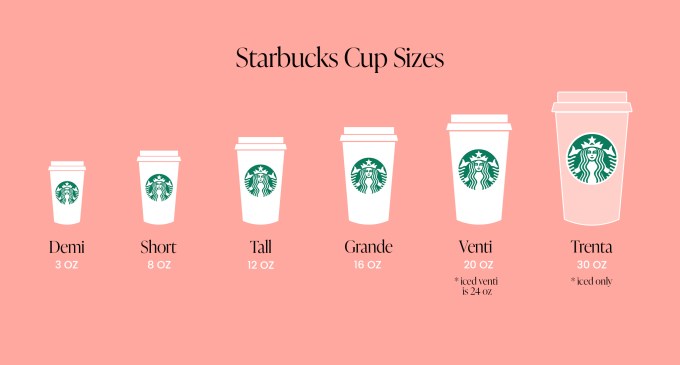
Starbucks coffee, AKA ‘Charbucks’ because they over roast the coffee berry, forces customers to speak a corporate argot. In past when I had gone to this shop I would ask for a medium coffee, the person behind the counter would say “We don’t have medium coffee, we have a Grande.” Ok I would like the medium sized cup, you have large, medium and small cups on that shelf and I want the medium sized cup. “Sorry, you’re going to have to specify which you want, Grande, small dick sized or huge dick sized.” Can you just give me a coffee and not force me to act like this is McDonald’s? It’s bad enough we have to call hamburgers Mc WTF’s now we have to say Mc Grande too?
You where this goes? Eventually Starbucks told servers to stop antagonizing customers who don’t want to use corporate speak to order coffee. It was at that point I decided that saying grande was ok, but I still patronized a small independent coffee shop.
Whenever someone comes out with a buzz word or gimmick phrase for a phenomenon we all know about, but never assign a name to, I categorically reject it on the grounds of my personal experience with 3rd grade history and the deconstruction of corporate argot, the lies about the Vietnam War, the truth manipulation in Pravda and the sexual innuendo in early Woody Allen movies that e we gun over my head as a child. ( as it should)
I don’t like the term lateral stiffness’ I reject this notion.
How am or why am I like this you ask? I take no responsibility for how I turned out.
I blame society.
P.S.
You never heard of Andy Rooney? Tough tacos buddy. That’s not my problem, that’s on you.
We may decide to simplify the concept or to make an effort in understanding what there’s behind.
It looks like pulsacion is a word that can be interpreted differently. Another word is compas. In flamenco, compas means meter or rhythm depending on the context.
We should draw the conclusion that pulsacion means both action and lateral stiffness.
While they also use words like Pulsacion, basically all they talk about to influence the Pulsacion and they can do, is indeed the action. Specially this part:
quote:
Cada guitarrista, una pulsación distinta
No hay una única acción ideal para todos los guitarristas. Algunos prefieren una pulsación más dura para mayor control, otros buscan ligereza y agilidad. Por eso es clave que la guitarra se adapte a la mano del intérprete. En Conde-Atocha lo sabemos bien: por eso escuchamos a cada músico, analizamos su técnica y ajustamos el instrumento a su medida.
La acción y el ajuste en una guitarra flamenca no solo afectan a la mecánica del toque, también influyen en el color del sonido. Una acción demasiado baja puede restar volumen y cuerpo, mientras que una acción más alta puede aportar mayor presencia, pero a costa de esfuerzo. Encontrar ese equilibrio es una cuestión de experiencia, oído y sensibilidad.
Basically what it says it, some prefer "heavy Pulsacion" and some "lighter Pulsacion", and there is no perfect "action" for all guitars, so we adjust the action accordingly to player's need to achieve their desired Pulsacion So more or less what Ricardo is saying is the way to achieve the desired matching Pulsacion, is what I'm understanding, but also what I always understood, which is basically that it is individual depending on player's style, heavy or light hand etc. But basically it all comes down to mostly action and setup, and not some stiffness on soundboard etc.
So yes, if there is such a thing described in one word "Pulsacion" is different from guitar to guitar and player to player, but the tools or means to influence it is mostly action/setup ?!
What I found noobish in this post, is that they don't even mention height of strings over soundboard. Just the typical 12th fret thing ..
And before that discussion starts, yeah I get it, Atocha and fleet of robots building them in the hidden basement in Valencia with fully automated machines and all that , but that is not the point
...Basically what it says it, some prefer "heavy Pulsacion" and some "lighter Pulsacion", and there is no perfect "action" for all guitars, so we adjust the action accordingly to player's need to achieve their desired Pulsacion So more or less what Ricardo is saying...
Guitarbucks we’re happy to serve you with all the pulsacion you want. Just specify what pulsacion you’re looking for. We’ll set you up with Demi-Pulse through Trenta-Pulse.
Images are resized automatically to a maximum width of 800px
I conclude that some factor or factors other than action contribute to the marked disparity in feel (pulsación) between these two instruments.
My hypothesis would be 1.neck angle, and 2. humidity, either giving the perception of hard or soft response, but what it can NOT be, which you ruled out by measuring, is its Pulsacíon aka ACTION, (assuming same strings as well). What you can do is on the stiff guitar LOWER THE ACTION , so even more, and it will probably feel like the same pulsación "magically".
Do guitarists and luthiers misuse the term "action"?
The string height is the correct term for guitar. The term "action" comes from piano.
"The “action” is the mechanism inside a piano that transforms the player’s touch on a key into a hammer strike that produces musical sound. Modern piano actions are often composed of over 8000 individual parts that all work together to translate the subtle movements of the fingers into expressive music that inspires."
Do guitarists and luthiers misuse the term "action"?
The string height is the correct term for guitar. The term "action" comes from piano.
"The “action” is the mechanism inside a piano that transforms the player’s touch on a key into a hammer strike that produces musical sound. Modern piano actions are often composed of over 8000 individual parts that all work together to translate the subtle movements of the fingers into expressive music that inspires."
That is the origin, but people began using the term action to describe how guitars respond players and how much effort is needed and over the years the word shifted to what we use today, which is string height. The word was copied most likely because string height is what determines how easily or difficult the instrument plays, just like action on piano I suppose. In any case, it is not "misused" if everybody knows exactly what it means (i.e. string height)
Do guitarists and luthiers misuse the term "action"?
They are generally imprecise as they typically only refer to the 12-fret string-height, and ignore the NECK ANGLE, which affects the response and feel on the right hand. It seems flamenco players and sometimes builders, have just as much if not MORE concern about that geometry.
When I was working on piano in college, it was only after I gained some "speed" and timing under my fingers that I even noticed the action of the different pianos in the practice room area (there were about a dozen rooms with different type of pianos). There was this one slightly out of tune old piano that had an amazing response, and I started noticing several students rejecting the others and waiting patiently in line for that ONE. Anyway the "feeling" is the same deal regardless if the action playabily/response is adjusted by a different mechanism. The resulting touch of the keys has the same thing as when we have high or low action on guitars.
I conclude that some factor or factors other than action contribute to the marked disparity in feel (pulsación) between these two instruments.
My hypothesis would be 1.neck angle, and 2. humidity, either giving the perception of hard or soft response, but what it can NOT be, which you ruled out by measuring, is its Pulsacíon aka ACTION, (assuming same strings as well). What you can do is on the stiff guitar LOWER THE ACTION , so even more, and it will probably feel like the same pulsación "magically".
No. Pulsación is the feeling, the perception. Changing the action is one of the few ways of changing the feeling, once the guitar is completed. Another way to change the feeling of a completed instrument is putting on strings of different tension or elasticity.
Flamenco guitars are set up to allow the player to do rasgueado and rip alzapua. Classicals are set up to play clean.
Tendinitis isn’t a result of a hard or soft action, but from squeezing too hard because the student isn’t taught to ‘hang on the string’ instead of clamping the hand together like an opposable digit vise.
I conclude that some factor or factors other than action contribute to the marked disparity in feel (pulsación) between these two instruments.
My hypothesis would be 1.neck angle, and 2. humidity, either giving the perception of hard or soft response, but what it can NOT be, which you ruled out by measuring, is its Pulsacíon aka ACTION, (assuming same strings as well). What you can do is on the stiff guitar LOWER THE ACTION , so even more, and it will probably feel like the same pulsación "magically".
No. Pulsación is the feeling, the perception. Changing the action is one of the few ways of changing the feeling, once the guitar is completed. Another way to change the feeling of a completed instrument is putting on strings of different tension or elasticity.
RNJ
I’m still mystified as to what pulsacion means. Let’s go either way it means the feeling and the perception of hard and soft haptic sensation. Haptic meaning how something responds to touch and how the human perception systems like sight and nervous networks in turn evaluate that feedback from the things we touch.
Ok, let’s try to make a language for the sensations, let’s try to frame out those micro feedback informations we’re getting loaded with. That’s difficult, it’s extremely complicated to create precise language for these dozens or maybe hundreds of little particles of information we’re bouncing back and forth between ourselves and tool we’re using, in this case a guitar. And because the precise language is perhaps impossible to verbally communicate, we transition into a non verbal communication between us and the guitar. When we get to that stage we over simplify the feedback from the guitar and how we touch it to make it respond. We use basic terms like hard action, soft action, or coin terms like lateral stiffness, but let’s not kid ourselves that we’re being precise, we’re not.
Our perceptions through our hands are too complex to describe in any other terms than the most inadequate simple words, and even then the words remain mostly abstractions of the huge gush of stimulus we get from playing the guitar. We are existing in the nonverbal logic of music and haptic senses.
When the guitar doesn’t feel right, it’s too this or too that and doesn’t spin, we use simple guesses at words or we craft analogies to explain the non functionallity to our repair person it set up person. Then that individual tries the guitar and says “Hmmmm. I feel what you mean.” Then through the accumulation of haptic memory and experience filing a bit here in this nut slot or reshaping the saddle and other purposeful moves the set up person solves problem and the guitar ‘spins right’ - its a wheel on a car that needed to be rebalanced, or different gauge of line for a flyrod that enables the rod to flex more efficiently.
All this stuff is non verbal intelligence. Maybe it’s enough to trust that it gets the job done and de-emphasize that need get wordy about how to express the problem? The repair person understands the set up work in in a non verbal way through touch. Of course a guitar nut has slots, overall dimensions, surface qualities like it’s highly polished, but the actual final adjustments are not really evaluated by dimensional information, after the correct fitting is had, but by a non verbal intelligence which is guided by the set up persons perception of the way the guitar feels.
Therefore the difference is semantic when we try to nail down what pulsacion and action mean, or other terms. They are just terms which when compared to the ferocity of the information we received haptically are pretty dull knives when used to cut the fattiness off of communication.
Haptic non verbal intelligence about how the guitar feels- lean, precise, instantaneous, ice breaking.
Words and metaphors- slow, indelicate, larded over, buffeted by windy interlocutors 😆
Speak not to what pulsacion means, but hand guitar to roadie who knows how to tweak a set up.
——-
Injuries from guitar playing are a whole other thing and happen more often due to bad technique habits, not bad ‘action’ of the set up. The proof is that skilled players with good technique can handle guitars with less than optimum set ups, and players with bad habits can wreck themselves in the guitar with an excellent set up.
Now you're talking and I agree with that marvelous pile of words. It's all about the haptics and it's a hugely complex bio-feedback system so of course we'll tend to simplify.
I just want to add something I implied earlier in the thread, which is sound itself could be considered to be haptic. It's also an input into the bio-feedback system and I just can't see how that wouldn't have an effect on what the fingers perceive. I might be wrong, but somehow I don't think so. I think, however subtle, the sound of the plucked string is processed along with what the fingers sense so, for example, a rapid, bright sonic response will "feel" different under the fingers to a response with, say, a lot of bloom or a soft sound or whatever. But, I don't really know, it's just a pet theory of mine and I haven't really spent much time delving into it in any depth. But it just kinda makes sense.
No. Pulsación is the feeling, the perception. Changing the action is one of the few ways of changing the feeling, once the guitar is completed. Another way to change the feeling of a completed instrument is putting on strings of different tension or elasticity.
RNJ
Pulsation is a "subjective feeling" by your definition. You can change that perception by "changing the action". That means you have defined action as "adjusting the saddle/frets/bridge/neck planing angle, etc.", attempting to REMOVE any subjective perception or feeling from the word "action" whatsoever, making it a measurable objective quantity. Next you say you can ALSO change the perception by changing the string tension, and hint that BEFORE COMPLETION, you can also have done something to affect the resultant subjective perception but once that happens it is now too late to consider it a variable.
I am afraid that your error was by dumping all those mechanical geometric variables under the umbrella of the term "action", such that removing "action" altogether then replacing the term with the SPECIFIC ADJUSTMENT (it doesn't matter if you only meant ONE, since it is not being argued that changing frets and planing the fingerboard also does the same job if dramatically) takes you to a place where in fact "Pulsation=adjustment/change of X,Y, Z, or ETC,".
The other variable mentioned is string brand/tension, let's call it "T", which you don't consider under that "action" umbrella, plus some unknown before completion that we discount (I would say Neck Angle to be realistic, and top wood/stiffness to be unicornly). I still consider these variables "Mechanical adjustments/changes". I am not clear how anyone could consider them otherwise, so why not admit these ALSO fall under the same definition "action" you want to use for the other variables?
Basically they all cancel out into a subjective perception of feeling, once adjusted, called "the action", regardless which mechanic is applied. Then we look at the statistics of what each of those can contribute, they balance out in some way, such that the EASY variable (saddle adjustment) should be recognized as the BIGGEST POTENTIAL contributor. Hence, the "hidden variables" are negated by the saddle adjustment mainly that contributes to the "subjective feeling" at a much higher statistical significance than anything else.
And by no coincidence we are seeing luthiers claim the "subjective feeling" aka pulsation, is a result of "saddle adjustment", allowing a fully correct and complete translation "pulsación=THE action".
Again, to be clear, my contention has always been the claim that adjusting the SADDLE (not that the string height at 12th fret appears mathematically the same on two different guitars=an adjustment has already been made/cancelled) will NOT change the perception of "soft or stiff" playability (pulsacíon). It is categorically false, and rather than argue about variables that affect "pulsation" we should be discussing variable that affect THE ACTION.
I think you and RNJ are differing on a matter of cause and effect. While action adjustment may point to a cause, the effect is the perception of the result. In a sense, you're describing two different things, at least that's how I see it. While I do agree that action is an overarching contributor to the playability of an instrument, I'm not at all convinced it can be considered to be the sole contributing factor to what is meant when describing its "feel". There's just so many other variables involved. I don't think anybody would disagree on how hugely significant the influence of the action is, however.
While I do agree that action is an overarching contributor to the playability of an instrument, I'm not at all convinced it can be considered to be the sole contributing factor to what is meant when describing its "feel".
I can only agree with your statement when I know what you mean by "action", because you are also trying to separate that term from "feeling". If you mean "saddle height as it affects string height at 12th fret and bridge to top height", then I would agree that while it is the case that the neck angle was the REASON the set up is at height X NOW, I disagree that the feeling cannot now be CHANGED DRAMATICALLY by raising or lowering the saddle. Hence whatever those other factors are that worry you, they will be negated by that adjustment, WITH IN THE LIMITS that you can actually adjust it. Again the neck angle is the REASON you have this situation, if it were different that changes things, but some don't consider it a variable anyway.
I also agree that if your guitar fell into the swimming pool, it will not improve much by adjusting the saddle, but carefully drying it out might.
While I do agree that action is an overarching contributor to the playability of an instrument, I'm not at all convinced it can be considered to be the sole contributing factor to what is meant when describing its "feel".
I can only agree with your statement when I know what you mean by "action", because you are also trying to separate that term from "feeling". If you mean "saddle height as it affects string height at 12th fret and bridge to top height", then I would agree that while it is the case that the neck angle was the REASON the set up is at height X NOW, I disagree that the feeling cannot now be CHANGED DRAMATICALLY by raising or lowering the saddle. Hence whatever those other factors are that worry you, they will be negated by that adjustment, WITH IN THE LIMITS that you can actually adjust it. Again the neck angle is the REASON you have this situation, if it were different that changes things, but some don't consider it a variable anyway.
I also agree that if your guitar fell into the swimming pool, it will not improve much by adjusting the saddle, but carefully drying it out might.
What I mean is action is a physical characteristic while feel is how the characteristic is perceived. I don't think they describe the same thing. This doesn't imply the action isn't a major contributor to feel or that changing the action doesn't have an impact on feel. Of course it does. But I do see them as separate. It's like saying I broke my finger and it hurts, the broken finger and the pain are still two different things. Which doesn't mean they aren't intimately related or intertwined. I think it's coming down to semantics at this point, where I think of action in terms of physical measurements while it seems that when you refer to action it encompasses both the physical characteristic as well as how the player/guitar responds to it.
I'm probably not explaining myself very well. I think a lot of what's been discussed in this thread only has relevance to English speakers, which is why Echi or someone living in the EU might have some frustration with it. When estebanana jokes that using the term comes across as pretentious well, in my opinion, it sure does when used in a North American English environment. That's why I won't use it. But for someone who speaks Spanish, they know what it means to them so it has no such negative connotation.
*edit* OK, I've thought about it some more and if someone called me up and asked me to adjust the pulsation on their guitar what I would tell them is I could adjust the action (within reason) and beyond that they could experiment with string gauges and materials. So, in that sense, I do agree with what you and Amelia are saying. But I wouldn't use the term, nor would I expect the person calling me to be able to articulate it in any great detail. At least in English it's kind of vague. I get a lot of guitars in that have what I call 'Internet set-ups' and, the minute I'd hear the word 'pulsacion', I'd be a little worried that that's what I'd be getting in to fix and I'd immediately move towards managing expectations. Internet set-ups are the worst.
Holy Conde, this is getting too f.ing complicated and philosophical. We are such nerds. But I love it. And it's good for my english too. Learn new words daily.
I will try to sum this up:
Ricardo: You can mechanically change your feelings (Pulsacion), since Pulsacion is nothing else than the sum of many different mechanically and otherwise changeable variables such as string height over 12th fret + string height over soundboard + neck angle + neck relief + are frets perfectly done and polished + string tension + string brand + humidity + are saddle and nut bone perfectly done + right break angle of strings + is the distance between strings perfect like my goldilocks Conde + did you wash your hands before playing like a noob or do you use sweat and Vaseline like a pro
Others: You can not change Pulsacion, each instrument has a certain Pulsacion like a vibrating soul with certain frequency and it is fixed in the grains of the wood. We refuse to mechanically change our Pulsacion.
Ricardo: You can mechanically change your feelings (Pulsacion), since Pulsacion is nothing else than the sum of many different mechanically and otherwise changeable variables such as string height over 12th fret + string height over soundboard + neck angle + neck relief + are frets perfectly done and polished + string tension + string brand + humidity + are saddle and nut bone perfectly done + right break angle of strings + is the distance between strings perfect like my goldilocks Conde + did you wash your hands before playing like a noob or do you use sweat and Vaseline like a pro
Others: You can not change Pulsacion, each instrument has a certain Pulsacion like a vibrating soul with certain frequency and it is fixed in the grains of the wood. We refuse to mechanically change our Pulsacion.
Correct me if I'm wrong so far.
Ummm, OK. You're wrong. Hahaha. I do think adjusting action can have an effect. Not only can, but does. I just think that 1. It's not the only thing that can have an effect and 2. To me, at least, action represents a measurement of one (albeit major) parameter of a system and pulsation represents how one perceives or describes the behaviour or response of a part of that system.
My brain hurts...heyyy...so that's his game. Ramzi!!!!

 Printable Version







 New Messages
 No New Messages
 Hot Topic w/ New Messages
 Hot Topic w/o New Messages
 Locked w/ New Messages
 Locked w/o New Messages
 Post New Thread