Welcome to one of the most active flamenco sites on the Internet. Guests can read most posts but if you want to participate click here to register.
This site is dedicated to the memory of Paco de Lucía, Ron Mitchell, Guy Williams, Linda Elvira, Philip John Lee, Craig Eros, Ben Woods, David Serva, Tom Blackshear and Sean O'Brien who went ahead of us.
We receive 12,200 visitors a month from 200 countries and 1.7 million page impressions a year. To advertise on this site please contact us.
I may have been splitting hairs when I distinguished perception from measurable properties. But confusion may arise from the fact that the word "pulsación" can mean "perception" in Spanish (see the Real Academia definition above)--while its English cognate "pulsation" does not (see, for example, Merriam-Webster).
There's an anecdote about the 18th-century English scholar, lexicographer and wit, Samuel Johnson.
Dr. Johnson was notorious for his slovenly personal habits. While riding in a coach with a refined lady, she was so offended that she exclaimed, "Sir, you smell!"
"No, Madam," replied Johnson, "you smell. I stink."
I may have been splitting hairs when I distinguished perception from measurable properties. But confusion may arise from the fact that the word "pulsación" can mean "perception" in Spanish (see the Real Academia definition above)--while its English cognate "pulsation" does not (see, for example, Merriam-Webster).
There's an anecdote about the 18th-century English scholar, lexicographer and wit, Samuel Johnson.
Dr. Johnson was notorious for his slovenly personal habits. While riding in a coach with a refined lady, she was so offended that she exclaimed, "Sir, you smell!"
"No, Madam," replied Johnson, "you smell. I stink."
There's an anecdote about the 18th-century English scholar, lexicographer and wit, Samuel Johnson.
Dr. Johnson was notorious for his slovenly personal habits. While riding in a coach with a refined lady, she was so offended that she exclaimed, "Sir, you smell!"
"No, Madam," replied Johnson, "you smell. I stink."
Winston Churchill was famous for his "bon mots." Seated next to Lady Astor at a dinner party at which he had drunk copious amounts of liquor, Lady Astor exclaimed, "Mr. Churchill, you're drunk!"
To which Churchill replied, "Lady Astor, I may be drunk, but you're ugly, and tomorrow I'll be sober."
Bill
_____________________________
And the end of the fight is a tombstone white, With the name of the late deceased, And the epitaph drear, "A fool lies here, Who tried to hustle the East."
Winston Churchill was famous for his "bon mots." Seated next to Lady Astor at a dinner party at which he had drunk copious amounts of liquor, Lady Astor exclaimed, "Mr. Churchill, you're drunk!"
To which Churchill replied, "Lady Astor, I may be drunk, but you're ugly, and tomorrow I'll be sober."
In 2015 or thereabouts in heard an interview with Boris Johnson who if I recall correctly had written a book about Churchill. On his book tour he dropped that he feels akin to Winston in the way he comports himself as a patriot of British culture, history and politics.
I must have separated rib bone from rib cartilage from spasmic laughter.
Even if it were Churchill channeling WC Fields, it makes a good story.
Bill
_____________________________
And the end of the fight is a tombstone white, With the name of the late deceased, And the epitaph drear, "A fool lies here, Who tried to hustle the East."
But confusion may arise from the fact that the word "pulsación" can mean "perception" in Spanish (see the Real Academia definition above)--while its English cognate "pulsation" does not (see, for example, Merriam-Webster).
I have no problem with that. What I have a problem with is that the word "ACTION" can also be a "perception", hence the two terms are translatable in Spanish/English, for what they are conveying. Since many factors affect the "opinion" of the action (including most importantly maybe, HOW you play as in "this action is easy!" and next guy same guitar "this feels like driving a truck compared to my guitar"), they are both umbrella terms that catch several objective facts. As we list these as if there are separate categories, we notice much overlap, but what I have always been getting at is, due to arguments ongoing, which of these objective facts PRECISELY DISTINGUISH the two, or fall outside of both categories and reside under only ONE?
Over time I have come to the conclusion it is ONLY the unicorn mysterious subjective bias junk, which I instinctively have discarded, and it was subsequently very nice to see one or two spanish luthiers address the issue SIMPLY as set up. Clean, clear, translatable, adjustable, fixable, etc., even if tailored to some individual perception. Pulsación=Action and we can now address the issues and reasons.
Luciano just made this video about Picado and string tension. Now check out 11:35
Interesting. So, in the context he's describing the words "touch" or "feel" would be a good fit. As in "Luciano has a nice touch" or "Luciano has good feel". I've actually used both those terms in that context.
But I'm kind of coming around to Ricardo's point of view in some regards. Firstly, when adjusting a guitar's "pulsacion" really adjusting the action is the obvious thing you'd do, so what Amelia was saying is a practical interpretation. Also, I do understand Ricardo's frustration with all the vague terms guitarists use to describe the playability of an instrument. Even the OP video ..."plays like butter"..I mean WTF??? So distilling it down to something that's actually quantifiable isn't without merit.
It all comes back to language barriers and semantics. From the Spanish side we have the assertions that pulsacion is the equivalent of action, pulsacion is how the guitar feels in hand and now pulsation is how the listener describes a players touch. There's probably more. What the heck? Bottom line is, you can't blame us English guys if the Spanish don't even know how to speak their own language.
P.S. Joking at the end there. I think I have a better understanding now. I think all three interpretations are likely correct. That means everyone wins and Ramzi's dastardly social engineering efforts now lie in ruins. HA!
Right. So on guitars with higher action, I can simply play over closer to the hole. When the strings are low action, I have to move closer to the bridge or the strings don't return to set position fast enough. This situation can be instant changed by raising or lowering the saddle. The string tension, as I said affects the situation as well, hence I said before changing the saddle you can experiment with strings and brands. As I said as well, drop the pitch or raise the pitch to change the action as well. Paco used to tune some guitars very sharp in pitch (observed by capo position and resultant pitches), and this is simply due to not wanting to raise the saddle higher than it was. The tension is higher if you increase the pitch.
The focus about the right hand only, deserves its own terminology, hence for a long time I thought everybody meant "right hand action", until the magical unicorn claims kept cluttering the issue. But what Luciano is missing is the reality, that I also realized, is that the pressing of the left hand down to the fret IS RELEVANT to what your right hand also is feeling. BOTH are connected via the action set up. The movement closer to the bridge will be on guitars that, if you could objectively compare (and you can't unfortunately take the neck off and replace or change its angle) have quicker easier left hand response AS WELL. In other words, all things equal, if the neck moves forward, RAISING the strings above the frets, my right hand will ALSO have to move closer to the soundhole, to get a good feeling/response. The two are connected.
Compare 13:00 picado here:
To this, and notice his RH position 0:22, looks much closer to the bridge.
Agree. But Luciano opened the door to the 4th dimension of Pulsacion. Because he is now speaking of the actual player having a certain Pulsacion, not the guitar, if you pay attention of what he actually said ("he has a very good Pulsacion")
Agree. But Luciano opened the door to the 4th dimension of Pulsacion. Because he is now speaking of the actual player having a certain Pulsacion, not the guitar, if you pay attention of what he actually said ("he has a very good Pulsacion")
Back to the Real Academia:
pulsar tr.
3. Dar un toque a una tecla, a una cuerda de un instrumento, a un mando de alguna máquina, etc.
I see that we are using "action" in two difference senses. I usually mean just the distance of the strings above the 12th fret.
Even with the expanded meaning of "action" advocated by Ricardo, there are other elements of the guitar's construction which can contribute to its pulsación.
Romanillos #407 has a spruce top, Indian rosewood back and sides, straightforward fan bracing. My Abel Garcia classical is spruce/Brazilian, and has a more complex bracing pattern.
When I tried out the only guitar Abel had at his house, the tercerola he made for his daughter, I played a Ponce prelude whose first phrase ends at the 5th fret on the 3rd string. I was impressed by the sonority and played it again, glancing at Abel. He said that the third string often indicates the quality of a guitar.
When I received my Garcia it displayed the same characteristic. The 2nd string, and especially the 3rd, respond better than any other guitar I have become familiar with. If I play a different guitar for a while, then pick up the Garcia, i find myself lightening my touch on the second and third strings, more closely matching my approach to the 1st and the 4th, to balance the sound volume and quality.
When I first became familiar with the Romanillos, I thought the 3rd string might be a little dull, as it is on most guitars. Playing 18 feet from a glass wall, with the sound reflected back, I found that the slight dullness affected the player, but not the listener. The reflected sound of the 3rd was as loud and brilliant as the rest of the strings.
Both instruments are strung with Labella EJ-45s, have the same elevation of the strings at the 12th fret, the same height of the saddle above the soundboard (and consequently the same neck angle}.
The top of the Romanillos is noticeably thicker than the Garcia's. The bracing is different. The grain of the Romanillos top is wider, the Garcia's top has a lot of medullary rays, etc. etc.
Both are great guitars, but they sound different while I play and they feel different. I conclude that something besides the setup and the neck angle must affect the pulsación.
The 2nd string, and especially the 3rd, respond better than any other guitar I have become familiar with. If I play a different guitar for a while, then pick up the Garcia, i find myself lightening my touch on the second and third strings, more closely matching my approach to the 1st and the 4th, to balance the sound volume and quality.
So, you mean all this time you were talking about the different response of TWO out six strings (you play them softer to balance across) proves (to yourself) that "pulsación" cannot be related to action? To be clear, the other FOUR strings being the same feel on the other guitar that has the same set up? Is that right?
If the above is correct, let me just say that there have been discussions about string sets and gauges such that hybrid sets will balance out better on some guitars after much experimentation. Have you tried La Bella 820's on the instrument? In particular their 2nd and 3rd red/purple seem (to me anyway) have a special quality that some folks have complained about (we know up to pitch they have a MUCH lower tension output than the first string), and something as simple as that could possibly balance the touch you are talking about that would equalize the guitar across the 6. I also like their bass sets as they are quite pliable out of the package unlike some other "normal tension" sets I have handled, and I often equated that as to why they rarely snap.
The 2nd string, and especially the 3rd, respond better than any other guitar I have become familiar with. If I play a different guitar for a while, then pick up the Garcia, i find myself lightening my touch on the second and third strings, more closely matching my approach to the 1st and the 4th, to balance the sound volume and quality.
So, you mean all this time you were talking about the different response of TWO out six strings (you play them softer to balance across) proves (to yourself) that "pulsación" cannot be related to action? To be clear, the other FOUR strings being the same feel on the other guitar that has the same set up? Is that right?
No. The Garcia's response on 2 and 3 is especially unique among guitars I have known, but the sound and feel of the Romanillos and the Garcia differ on all strings, in all registers. I should have been clearer about this in my last sentence above.
I have never meant to say that "pulsación cannot be related to action." indeed, changing the height of the bridge saddle is one of the few ways to change the pulsación of a completed instrument.
Right. So on guitars with higher action, I can simply play over closer to the hole. When the strings are low action, I have to move closer to the bridge or the strings don't return to set position fast enough. This situation can be instant changed by raising or lowering the saddle. The string tension, as I said affects the situation as well, hence I said before changing the saddle you can experiment with strings and brands. As I said as well, drop the pitch or raise the pitch to change the action as well. Paco used to tune some guitars very sharp in pitch (observed by capo position and resultant pitches), and this is simply due to not wanting to raise the saddle higher than it was. The tension is higher if you increase the pitch.
The focus about the right hand only, deserves its own terminology, hence for a long time I thought everybody meant "right hand action", until the magical unicorn claims kept cluttering the issue. But what Luciano is missing is the reality, that I also realized, is that the pressing of the left hand down to the fret IS RELEVANT to what your right hand also is feeling. BOTH are connected via the action set up. The movement closer to the bridge will be on guitars that, if you could objectively compare (and you can't unfortunately take the neck off and replace or change its angle) have quicker easier left hand response AS WELL. In other words, all things equal, if the neck moves forward, RAISING the strings above the frets, my right hand will ALSO have to move closer to the soundhole, to get a good feeling/response. The two are connected.
Let's talk more about this. Let's use physics / measurable things.
To make the question easier, let's think about *one* guitar. Everything stays the same: string brand / tension, humidity, etc. The only thing we change is the height of the saddle. If we raise the saddle, you're saying you feel more comfortable playing closer to the hole. If we lower the saddle, you feel more comfortable playing closer to the bridge.
Why is that? Like through physics / measurable things, why would you feel any difference in how comfortable it is to play (for the *right* hand) if the only thing changing is the saddle height? I can visualize why raising the saddle height makes it more difficult for the left hand - you have to press stronger to move the string further down towards the fret to get a clean note. I cannot visualize why raising the saddle height makes it more difficult for the *right* hand, though. So in other words, I'm going back to the image I posted from the late Ben Woods. I went over Arash's response, but I'm not sold.
Ricardo, you said that if you raise the saddle, that accomplishes a similar effect to changing the strings from medium tension to high tension. Why would it? Let's factor out of the equation variables such as: capirote / blood from dance accompaniment / being able to rest the thumb on the top / picado hitting the top. Let's assume all those things do *not* get affected when we raise the saddle. If you're just purely talking about pushing your finger through the strings, "upward", like you're doing a rest stroke and pulling the G string towards the D string - why would a higher saddle make that more difficult thereby necessitating you moving to the hole to regain comfort / sweet spot? I don't get how the saddle height affects how difficult it is to "pull" your finger through the G string via a rest stroke with your right hand finger ending on the D string.
Can someone explain that through physics?
If we keep the saddle height constant, I get that if you play closer to the bridge, that is an area where the string is closer to its "immobile" point (at the saddle), so to move it requires more force. The farther away from the saddle you go, the more "room" you have to move the string, thus the easier it feels to "pull through" via a rest stroke. Why would changing the saddle height affect the impact from the immobile point? Is it because the amount of string from the tie block to the peak of the saddle where the string makes contact is now *longer* due to the increased height of the saddle, so now there's "less" string between the saddle and the nut, which therefore increases the tension of the strings since they travel a shorter distance between two immobile points?
Ricardo, you said that if you raise the saddle, that accomplishes a similar effect to changing the strings from medium tension to high tension. Why would it?
The string amplitude is volume. Lowering the action decreases that potential as the string will slap into the frets, hence you lose volume with a lower action, and vice verse, you get more volume by increasing.
If you play over the sound hole violently rapid apoyando, the tension is looser and floppier there and what you are doing is killing the amplitude by spanking the strings against the frets. Like dribble a ball closer and closer to the ground, it goes crazy. Whenever someone says to me this guitar is "clean" it does not buzz, I say "really?" and then do that A-hole procedure to make their guitar sound like a banjo junky buzzing thing. Much laughter shock and amazement results (Ricardo you are a jerk! etc.).
So we need the rebound to be controlled in a way that we can keep the speed going. If normal play is buzzing or fretting out your notes, then you instinctively move closer to the bridge to stabilize the sound wave of the string (it is too floppy in the normal spot you play). If you raise the action, you are allowing the "spank spot" more room for the amplitude to grow big without fretting out, or rather, you are shifting the "sweet spot" away from the bridge. The sweet spot shifts back toward the bridge as you decrease that amplitude limit. If you play in the same spot and raise the action, the tension there goes up and you get a metallic sound. If you want that super metallic response on a low action guitar you need to get much closer and closer to the bridge than whatever was "normal".
Ricardo, you said that if you raise the saddle, that accomplishes a similar effect to changing the strings from medium tension to high tension. Why would it?
The string amplitude is volume. Lowering the action decreases that potential as the string will slap into the frets, hence you lose volume with a lower action, and vice verse, you get more volume by increasing.
If you play over the sound hole violently rapid apoyando, the tension is looser and floppier there and what you are doing is killing the amplitude by spanking the strings against the frets. Like dribble a ball closer and closer to the ground, it goes crazy. Whenever someone says to me this guitar is "clean" it does not buzz, I say "really?" and then do that A-hole procedure to make their guitar sound like a banjo junky buzzing thing. Much laughter shock and amazement results (Ricardo you are a jerk! etc.).
So we need the rebound to be controlled in a way that we can keep the speed going. If normal play is buzzing or fretting out your notes, then you instinctively move closer to the bridge to stabilize the sound wave of the string (it is too floppy in the normal spot you play). If you raise the action, you are allowing the "spank spot" more room for the amplitude to grow big without fretting out, or rather, you are shifting the "sweet spot" away from the bridge. The sweet spot shifts back toward the bridge as you decrease that amplitude limit. If you play in the same spot and raise the action, the tension there goes up and you get a metallic sound. If you want that super metallic response on a low action guitar you need to get much closer and closer to the bridge than whatever was "normal".
My sound I super metallic and I’ll share my secret. Reach back behind the bridge and play on the side where the strings are tied into the bridge. It sounds so radical, like continental plates of iron grinding together
Ricardo, so having a higher saddle means having more distance between the frets and the strings, so it is less likely that plucking the strings will cause them to hit the frets as they vibrate.
Higher tension strings move less with plucking, so they are also less likely to hit the frets when they are plucked and start to vibrate compared to medium tension strings.
If we assume the saddle height is constant and the string tension is constant, why does plucking a string closer to the sound hole make it more likely to hit the frets (and sound floppy) as compared to plucking the string closer to the bridge (where it will be less likely to hit the frets and more likely to sound metallic)?
I can't remember this concept from my high school physics classes. It has something to do with nodes and resonant frequencies and standing waves, right?
These are excellent questions. I do know that the string will reflect the location of the initial attack at the opposite end but why plucking hard near the bridge leads to a lower amplitude throughout eludes me. I know this has been discussed elsewhere and is also covered in various books. For instance, Somogyi explains some of it in his book using a rope as an analogy. I'd have to pull it from the shelf and reread it but it's late right now so it'll have to wait.
The closer to the bridge the pluck gets, the more asymmetrical the string excursion becomes. The short part of the string effectively puts a leash on the long part of the string this limits both amplitude and distance traveled.
It’s not really with the effort to try to understand this in terms of physics. The metaphysics are more accurate:
All guitars that exist, will exist or have existed are already guitars, they are just waiting for someone to assemble them. The makers of past generations incrementally proved all the rights and wrongs by communal trial and error, we’re just polishing the thing they invented. Most good guitar makers are marginally interested in why they work, a tedious minority keeps banging their head against the physics wall because they are hard wired with that brand of curiosity.
Guitars work because they work, and flamenco guitars in particular are fully developed and exist in harmony with the task of accompaniment of singing and dancing, and the odd solo playing which affords us all a way to sneak over the bar and get cana de cerbetha while the guitarist organ grinds a long slow arsed taranta.
The flamenco guitar is a done deal, it’s ‘suum perfectum’ in Latin.
You raise the saddle to get more sound, but less hand friendly rasgueado, lower the saddle to get more growly and more rasgueado friendly - while observing the diminishing returns of too much of either adjustment.
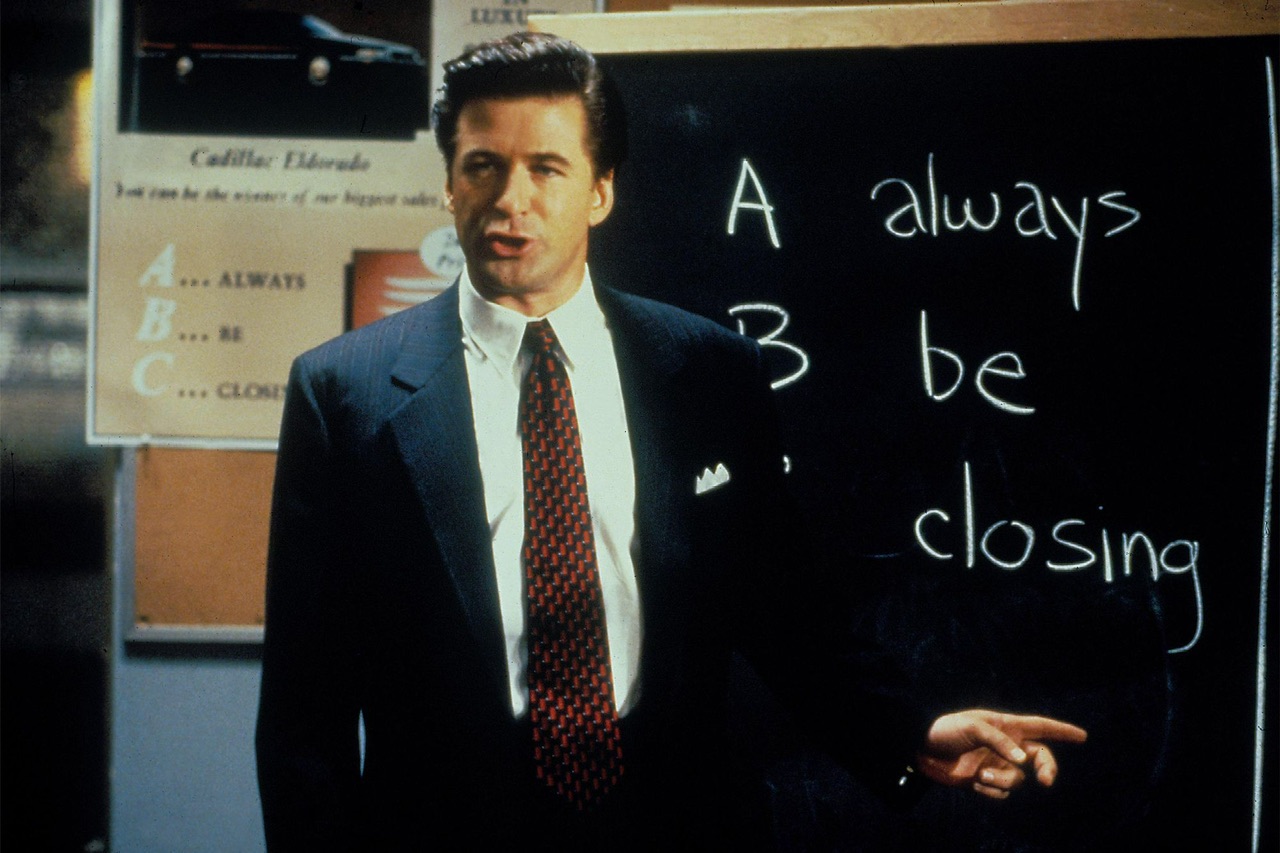
Period. No physics because physics is for obsessive poofies. Unless it’s Astrophysics which is very interesting. Soundhole physics is for losers and losers don’t close. Losers don’t get bonuses or Cadillacs. Losers don’t get leads.
A. Always B. Be C. Closing
Put that coffee down, ☕️ is for closers.
Images are resized automatically to a maximum width of 800px
Eugene Clark had a phrase he used to describe the way a string worked. He called it ‘string tempo’.
String tempo for him was the way you could modulate the production of the sound in both volume and sound quality. You can work the string tempo to suit the guitar and the person playing it to a very great extent.
Whether it’s a helpful term or not, for me it’s been useful to keep in mind. The guitar, each individual guitar seems to have a basic string tempo, you can modify what the guitar already has mainly by lowering or raising the saddle until you or the player intuitively FEELS the guitar is correct for them.
A. Always S. Stay L. Loose
That’s how you don’t get injured. Injuries have relatively little to do with the guitar itself if it’s adjusted well. People think squeezing your opposable fingers and thumb together like a C-Clamp is how you play a guitar. It’s not, you use the weight of your arm and body to pull the string down to the fingerboard and reserve thumb against finger clamping for certain preparations of chords.

 Printable Version












 New Messages
 No New Messages
 Hot Topic w/ New Messages
 Hot Topic w/o New Messages
 Locked w/ New Messages
 Locked w/o New Messages
 Post New Thread